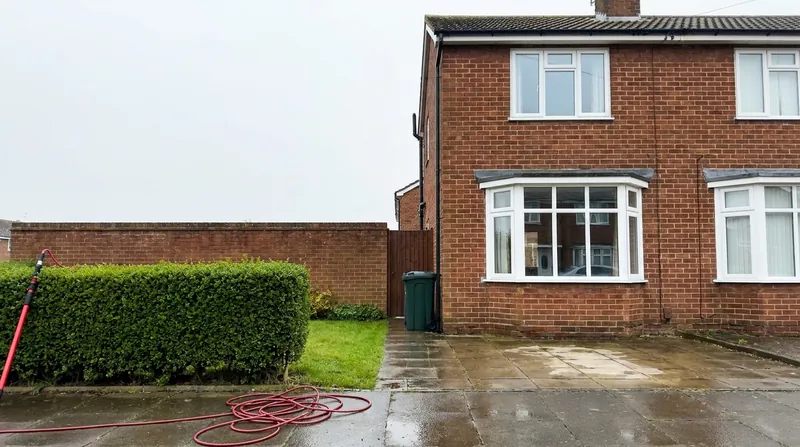
A gutter vacuum is a powerful wet-and-dry vacuum connected by a hose to long, light poles, usually carbon fibre, with a curved nozzle at the top. The nozzle reaches into the gutter from the ground and sucks out leaves, moss, silt and water, so the gutter is cleared without anyone climbing a ladder.
How does a gutter vacuum work?
There are three parts. On the ground is a vacuum unit, much bigger and stronger than a household vacuum, usually with a large drum to collect the waste. A wide hose runs from the vacuum up a set of hollow poles. At the top is a bent nozzle, shaped like a hook, that sits inside the gutter.
The operator stands on the ground and moves the nozzle along the gutter. The suction pulls everything in its path down the poles and into the drum: dry leaves, wet sludge, moss, twigs, seeds and standing water.
What are the poles made of?
Most professional systems use carbon fibre or a mix of carbon and glass fibre. Carbon is strong but very light, which matters when you’re holding several metres of pole above your head. The poles come in sections that join together, so the length can be set for each job, from a low bungalow gutter to the back of a two-storey house.
How do you see into the gutter from the ground?
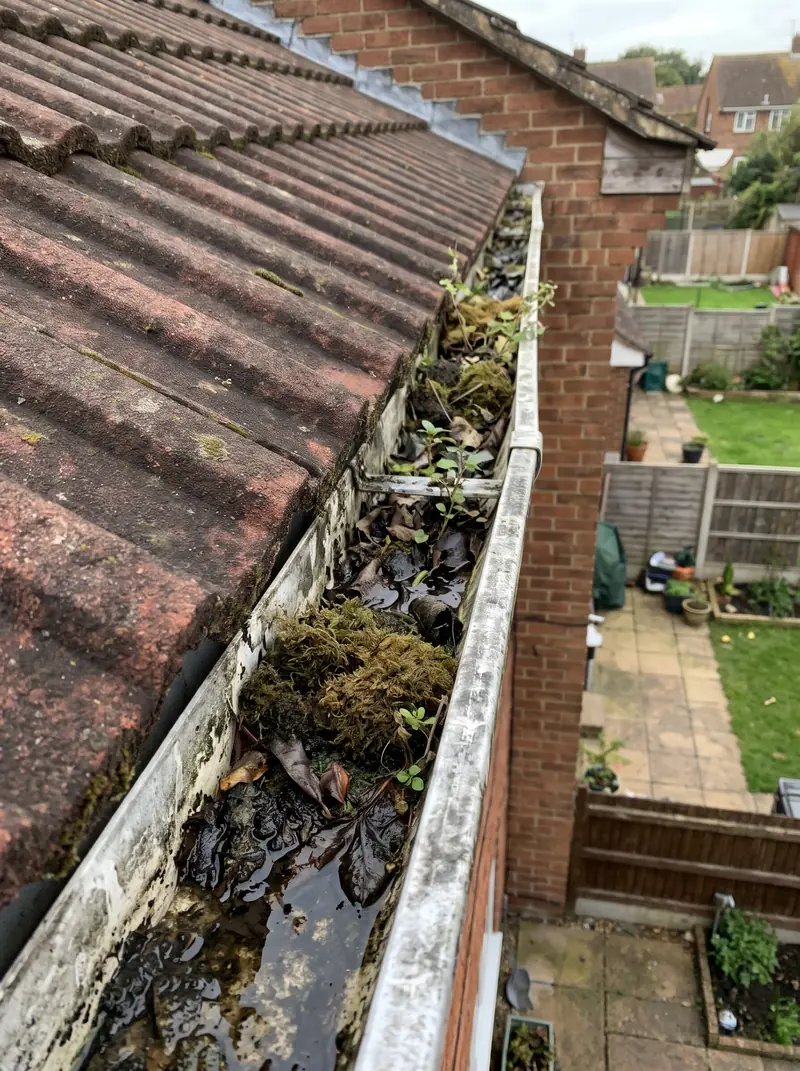
With a camera. A small camera clips to the top of the pole, pointing into the gutter, and sends a live picture to a screen or tablet on the ground. The operator can see where the nozzle is and what’s left in the gutter. The camera also lets the homeowner see inside their gutters, often for the first time.
We use an inspection camera on every job. You see the gutter before we start and after we finish, and we can send you the photos. What a gutter camera shows.
Why use a vacuum instead of a ladder?
A few reasons:
- Safety. Working from the ground avoids moving a ladder every couple of metres along a wall.
- Kinder to gutters. A ladder leant against a plastic gutter can crack it or bend the brackets. The vacuum nozzle sits inside the gutter and nothing leans on it.
- Gets the silt out. Hand scoops lift leaves, but often leave a layer of fine wet silt behind. Suction lifts that too.
- Tidier. Everything goes into the drum, not onto your path, car or lawn.
- Reaches over obstacles. Conservatories, porches, bay roofs and flat-roofed extensions don’t need to be climbed on.
Can a gutter vacuum work in the rain?
Yes. A wet-and-dry vacuum is designed to suck up water. Wet leaves and silt are heavier, but a good vacuum handles them. Rain can even help, because you can see where water is pooling. Only high winds, which make long poles hard to control, or thunderstorms, stop the job.
How high can a gutter vacuum reach?
It depends on the system, but professional poles reach the gutters on a typical two-storey house comfortably from the ground. Taller houses, three-storey town houses and homes on steep slopes need checking first. A gutter vacuum operator should tell you honestly if a gutter is out of reach rather than overstretch.
What can’t a gutter vacuum do?
It can’t repair anything. It won’t fix a gutter that sags, leaks at the joints or runs the wrong way, and it won’t clear an underground drain. It also isn’t a roof cleaner: it removes the moss that has fallen into the gutter, not the moss growing on the tiles.
A very solid blockage deep in a downpipe may need rods or water pressure as well as suction. That’s part of downpipe unblocking.
Is a gutter vacuum noisy?
It’s about as loud as a big household vacuum or a garden blower, in bursts of a few minutes at a time. Most homes take between half an hour and an hour and a half, so the noise is short-lived.
What happens to the waste?
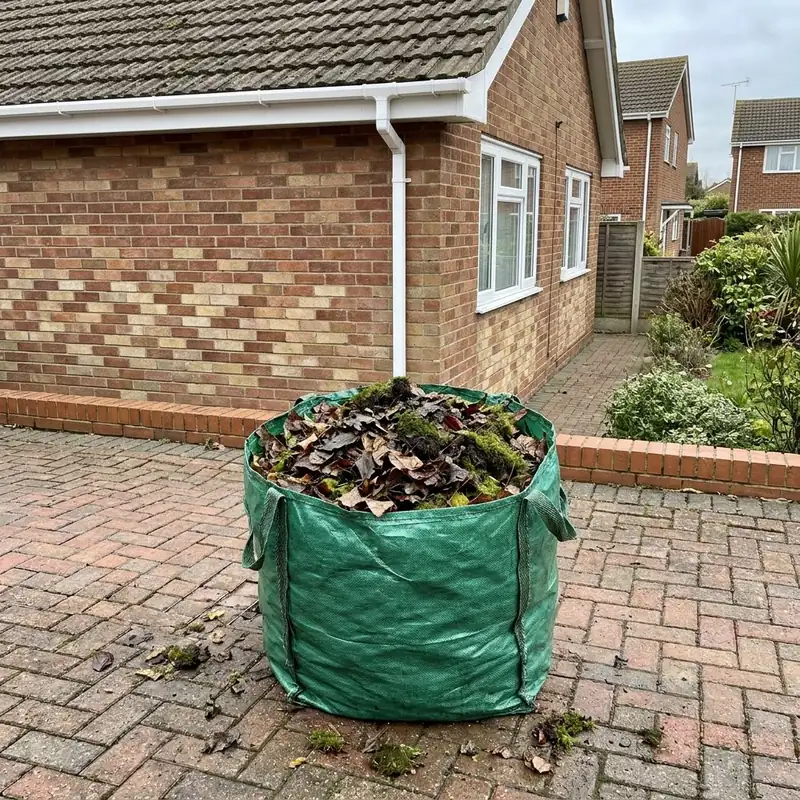
The drum fills with leaves, moss, silt and water. We empty it into bags and take them away. Leaves and moss compost well if you’d like to keep them; the grit from concrete tiles doesn’t, so it’s better removed.
Can I buy or hire a gutter vacuum myself?
You can, but domestic versions are usually much less powerful, with shorter poles and no camera. Without a camera you can’t see what you’re doing at the top, which makes it easy to miss sections. For most people, one professional clean a year costs less than buying a decent system.
How do I know if a gutter vacuum is right for my house?
For nearly every bungalow, semi, terrace and detached house in Essex, it is. If you’re unsure, send us your postcode and a photo of the house. Our gutter vacuum page explains how we use it on each job.
Does a gutter vacuum damage roof tiles?
No. The nozzle works inside the gutter, below the bottom row of tiles. The camera lets us see where the nozzle is, so we keep it clear of loose tiles, aerials and cables. Nothing is pushed up under the tiles and nobody walks on the roof, which is where most tile damage during gutter work comes from.
How long does a vacuum gutter clean take?
Most Essex homes take between half an hour and an hour and a half. That includes the camera look before and after and the water test on each downpipe, which are the parts that tell you the job is done properly.